Castle Stuart
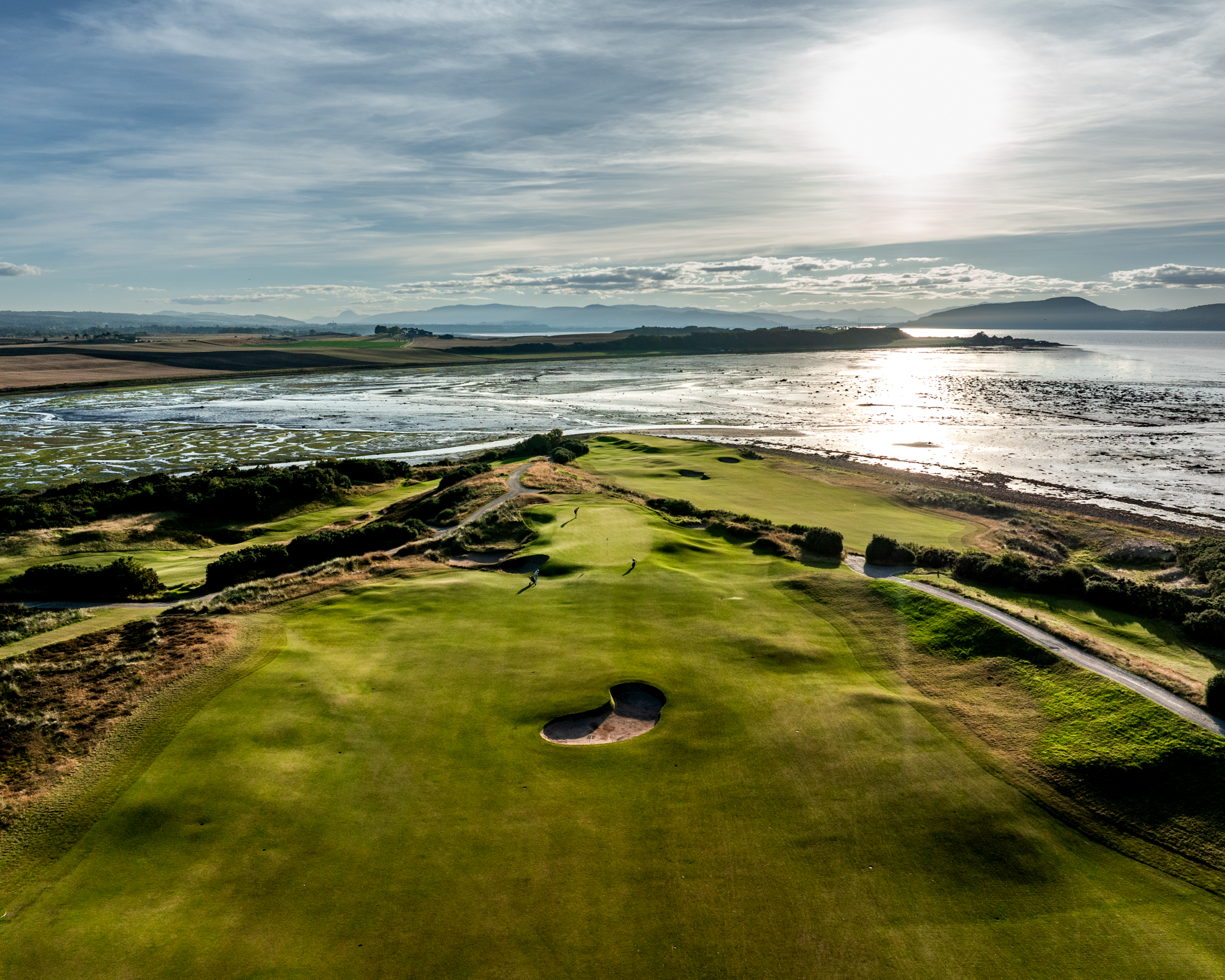
A Modern Tribute to Scottish Links
Castle Stuart is a modern yet traditional-feeling Scottish links course set dramatically along the Moray Firth, where wide, sweeping fairways run atop coastal bluffs and greens appear to hang over the sea. Designed by Gil Hanse and Mark Parsinen, it blends classic early-20th-century links aesthetics with contemporary playability, using the natural and rugged landscape, rumpled terrain, and striking “infinity-edge” greens to create both beauty and strategic challenge. With varied holes, constant ocean views and Highlands scenery, and a thrilling final stretch, it stands as one of Scotland’s most scenic and thoughtfully crafted courses.

Hole 1
As you approach the first tee, you’ll see a solid bank of gorse on the left and the full expanse of the Moray Firth on the right—an exquisite welcome to Castle Stuart Golf Links.
Hole 1

Hole 2
A tee shot to the upper left fairway plateau will leave you the best angle to go for the green in two. If you’d rather lay back and play your third shot into the green, a tee shot to the lower right fairway hollow leaves the easiest approach.
Hole 2

Hole 3
If you managed your game successfully on the first two holes, you’re now ready for a different kind of fun. This is a drivable par 4 under most conditions.
Hole 3

Hole 4
Depending on wind conditions, pin placement, and preferred shot shape, you can land your approach short on the high left fairway plateau and watch it release down and to the right onto the front-left portion of the green.
Hole 4

Hole 5
A solid drive that favors the right side of the fairway is perfection. While standing on the tee, the right side of this generous fairway is out of sight behind the large hillock of gorse. Best to approach this green from the right due to a hidden valley of fairway and a steep contour guarding the front-left side of the green.
Hole 5

Hole 6
Appreciate while standing on the tee of this hole that the green is long and narrow (16 paces wide) with bunkers guarding it from the front, left and right sides. This straightaway hole will often come down to how you’ve positioned yourself relative to the bunker that is 80 yards in front of the green.
Hole 6

Hole 7
An approach from the left of this fairway is far more manageable than from the right. Shots into the green from the right can be visually intimidating since they place the green on the edge of the “old sea cliff” and make its contours look as though they could release even well-struck shots toward the abyss.
Hole 7

Hole 8
Finding your way to the correct half of the green is your first order of business on this somewhat lengthy par 3. Except under headwind conditions, getting the ball on the ground well before the green is a smart strategy.
Hole 8

Hole 9
Downwind this par 4 is drivable for many players, but your line needs to favor the right side of the fairway where contours can bring your shot onto the back portion of the green.
Hole 9

Hole 10
The best play off the tee is to the left side of the fairway—the green’s significant contour runs front to back and approach shots from the higher right side of the fairway are quite difficult.
Hole 10

Hole 11
Now for some fun on this short par 3. Any shot long (either left or right) leaves a difficult up and down—keep that in mind if you’re a low handicapper who’s aiming directly at mid-to-back pin locations.
Hole 11

Hole 12
The first order of business on this par 5 is to keep your drive in play. Then have some fun. Laying up to a distance short of the intruding “landform” on the right is the smartest strategy.
Hole 12

Hole 13
This is a classic risk/reward dogleg right—the more you challenge the hollow on the right off the tee, the closer you’ll be to the green.
Hole 13

Hole 14
The landing area off the tee on this shorter par 4 is wider than it appears when looking down the “dune slack.” The left side of the fairway allows playing down the lengthy axis of the green and the fronting ground is flatter and more reliable. You can often recover nicely around this green with just a putter.
Hole 14

Hole 15

Hole 16
Get ready for a delightful finishing stretch of three “tweener” holes: a drivable par 4 where birdies abound, followed by a long par 3 where bogies loom, and a par 5 finale where palpable seduction will lead some to eagles and others to bogies.
Hole 16

Hole 17
Welcome to the longest of all the par 3s at Castle Stuart Golf Links. Obvious danger lies down the right side, but this hole is more forgiving that it looks—the contours on the left and short of the green turn a releasing shot down and onto the putting surface.
Hole 17

Hole 18
While you stand on the tee of this final hole, it’s best to focus squarely on the target—the prominent blue Scottish saltire left of the clubhouse is a wonderful line. Trust it. Use it. Let your drive go.
Hole 18


Explore Old Petty
Our newest course, Old Petty by renowned golf course architect Tom Doak welcomed golfers for preview play in 2025, with it’s official grand opening set for 15th May 2026. Playing on a pristine piece of land surrounding the 400-year old Castle, Old Petty incorporates natural contours, meandering through hillsides and expansive open land with several holes along the water.
